
Supporting Speech Development in Toddlers with Autism: What Helps and Why It Matters
Sydney Geyer
If your toddler has been diagnosed with autism, or you are beginning to notice differences in how they communicate, you may feel uncertain about how to best support their speech and language development. Many parents wonder when their child will begin to talk, how to encourage communication, and what approaches are actually effective. These concerns are incredibly common, and importantly, research shows that early, responsive, and intentional support can significantly improve communication outcomes of young children with autism.
Toddlers with autism spectrum disorder (ASD) often experience differences in how they develop communication skills. These differences may include delayed spoken language, limited use of gestures such as pointing or waving, reduced eye contact, or difficulty engaging in shared attention with others. Some children may repeat words or phrases, a pattern known as echolalia, while others may struggle with the social use of language. Researchers emphasize that these are not simply delays, but differences in how children process and engage with social and linguistic information (Tager-Flusberg et al. 2005). One particularly important skill connected to later speech development is joint attention, which refers to the shared focus between a child and another person on an object or activity. Because toddlers with autism may have difficulty with joint attention, they often benefit from additional support in developing this foundational skill (Mundy & Newell 2007).
Early intervention plays a crucial role in supporting communication development. Studies have consistently found that interventions during the toddlers years- particularly between ages two and three- can lead to meaningful improvements in language, social interaction, and overall development (Dawson et al. 2010). This is largely due to the brain’s high level of plasticity during early childhood, meaning it is especially responsive to learning and environmental input during this time.
One of the most effective ways to support speech development is by following your child’s lead during play and daily routines. Rather than directing activities, caregivers can observe what their child is naturally interested in and join them in that moment. This approach increases engagement and creates more opportunities for meaningful communication (Siller & Sigman 2002). For example, if a child is focused on spinning the wheels of a toy car, a caregiver might sit by and describe the action using simple language such as “spin” or “the wheel is spinning”. This supports language development without interrupting the child’s focus or enjoyment.
Using simple, functional language is another important strategy. Toddlers with autism often benefit from hearing short clear phrases that highlight key words rather than long or complex sentences (Ingersoll & Dvortcask 2010). Phrases like “more juice,” “go outside,” or “big ball” provide accessible language models that children can more easily understand and eventually imitate. Repetition of these phrases in meaningful contexts further supports learning. Creating natural opportunities for communication throughout the day can also encourage speech development. When children are motivated to request something they want or need, they are more likely to attempt communication (Koegel et al., 2003). Caregivers can support this by placing a favorite toy slightly out of reach, pausing during a familiar song, or offering choices between items. Even if a child does not yet use words, gestures, sounds, or eye gaze should be recognized and responded to as valid forms of communication.
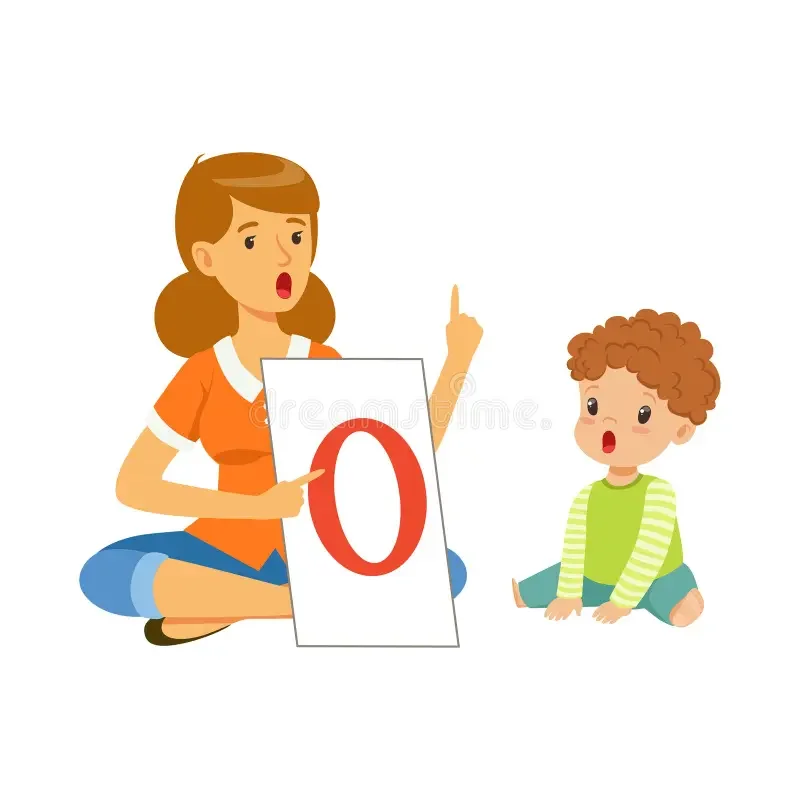
Visual supports can be especially helpful, as many children with autism process visual information more effectively than spoken language. Tools such as picture cards, visual schedules, or pairing gestures with spoken words can increase understanding and reduce frustration (Hodgdon, 1995). These supports help bridge the gap between comprehension and expression, making communication more accessible.
Imitation is another key component of early language development. When caregivers imitate a child’s sounds, actions, or play behaviors, it creates a back-and-forth interaction that encourages the child to engage and eventually imitate in return (Ingersoll, 2008). This reciprocal process strengthens social connection and lays the groundwork for speech.
Equally important is responding to all communication attempts, regardless of whether they are verbal. When caregivers consistently acknowledge and expand on a child’s attempts to communicate, it reinforces the value of communication and encourages further attempts (Yoder & Warren, 2002). For instance, if a child reaches for a snack, the caregiver might respond by saying, “You want crackers! Crackers!” This helps connect the child’s action with language in a meaningful way.
For some children, augmentative and alternative communication (AAC) tools, such as picture exchange systems or speech-generating devices, can provide additional support. Research has shown that AAC does not hinder the development of spoken language; in many cases, it actually facilitates it by giving children a reliable way to communicate while speech is still emerging (Romski et al., 2010). It is important to recognize that progress in speech development may not follow a straight or predictable path. Growth may be seen in small but meaningful ways, such as increased eye contact, greater use of gestures, more vocalizations, or improved understanding of language. These steps are all part of the broader process of developing communication skills. If concerns about a child’s speech persist, seeking support from professionals such as Speech-Language Pathologists or early intervention programs can be highly beneficial. Early intervention services, which are available in the United States for children under the age of three, provide targeted support during a critical developmental window.
Ultimately, supporting a toddler with autism in developing speech is not about changing who they are, but about meeting them where they are and building communication in ways that feel natural and supportive. Through consistent, responsive interactions, caregivers can create a strong foundation for communication and connection. Over time, these everyday moments—filled with patience, responsiveness, and understanding—can lead to meaningful growth in how a child expresses themselves and connects with the world around them.
References:
Dawson, G., Rogers, S., Munson, J., Smith, M., Winter, J., Greenson, J., …
Varley, J. (2010). Randomized, controlled trial of an intervention for toddlers with autism: The Early Start Denver Model. Pediatrics, 125(1), e17–e23.
Hodgdon, L. Q. (1995). Visual strategies for improving communication.
QuirkRoberts Publishing.
Ingersoll, B. (2008). The social role of imitation in autism. Infants &
Young Children, 21(2), 107–119.
Ingersoll, B., & Dvortcsak, A. (2010). Teaching social communication to
children with autism. Guilford Press.
Koegel, R. L., Koegel, L. K., & Carter, C. M. (2003). Pivotal teaching
interactions for children with autism. School Psychology Review, 32(3), 346–358.
Mundy, P., & Newell, L. (2007). Attention, joint attention, and social
cognition. Current Directions in Psychological Science, 16(5), 269–274.
Romski, M., Sevcik, R. A., Adamson, L. B., Smith, A., Cheslock, M., &
Bakeman, R. (2010). Randomized comparison of augmented and nonaugmented language interventions. Journal of Speech, Language, and Hearing Research, 53(2), 350–364.
Siller, M., & Sigman, M. (2002). The behaviors of parents of children with
autism predict later language development. Journal of Autism and Developmental Disorders, 32(2), 77–89.
Tager-Flusberg, H., Paul, R., & Lord, C. (2005). Language and
communication in autism. In F. Volkmar et al. (Eds.), Handbook of autism and pervasive developmental disorders. Wiley.
Yoder, P., & Warren, S. F. (2002). Effects of prelinguistic milieu teaching
and parent responsivity education. Journal of Speech, Language, and Hearing Research, 45(6), 1158–1174.